
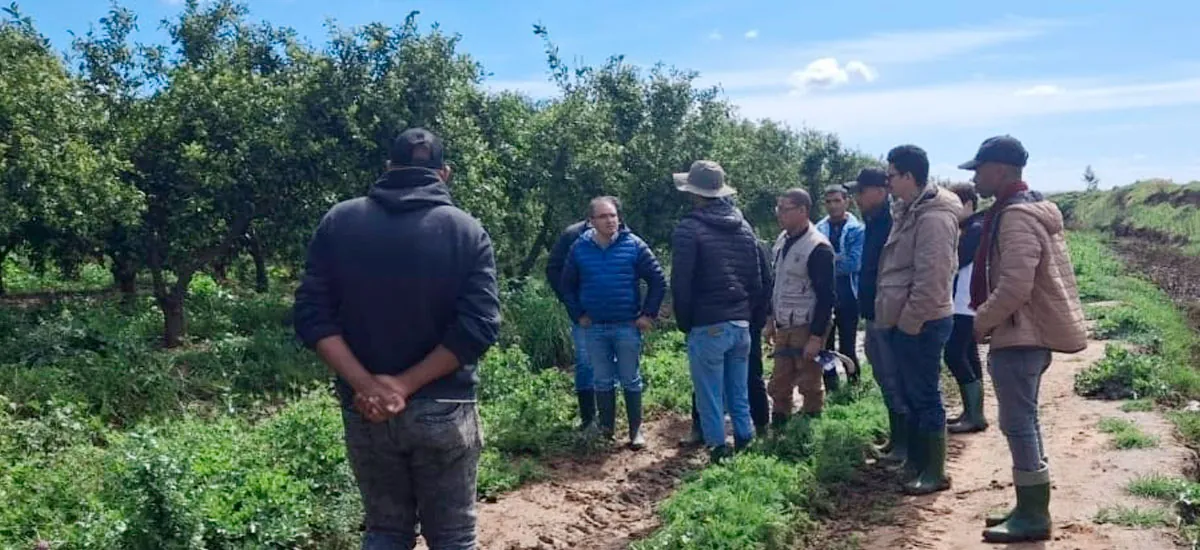
Automatic translation via Google Translator©The end of winter in citrus fruits marks one of the most critical points of the season. It is the moment when the crop transitions from dormancy to a phase of high physiological activity, in which key processes such as budding, flowering, and fruit set are defined.
However, this process is no longer predictable. Irregular winters, temperature fluctuations, and episodes of accumulated stress are transforming how the crop responds.
In this context, the difference lies not in applying a standard program. It lies in interpreting the crop and making accurate decisions.
And that’s where the technical advisor makes the difference.
A new scenario: the end of winter in extreme agricultural conditions
The current context necessitates a rethinking of crop management. Climate variability is generating situations typical of extreme agriculture, where each growing season exhibits different characteristics.
This translates to:
- Uneven sprouting
- Mismatches between vegetative development and flowering
- Irregular physiological responses
- Increased sensitivity to abiotic stress
Managing this phase requires abandoning generalist approaches and working with strategies adapted to each plot.
The technical advisor as the central figure in the strategy
There are no universal solutions for the end of winter. Each farm responds differently depending on multiple factors:
- Nutritional status of the crop
- Soil conditions
- History of water or heat stress
- Variety and productive load
As a technical advisor, your role is to interpret this complexity and transform it into concrete decisions.
You are who:
- Analyze the crop signals
- Define the moment of intervention
- Adjust the nutritional and biostimulant strategy
In this phase, the accuracy of decision-making directly influences the development of the campaign.
What happens in the crop at this key moment?
During the end of winter, the citrus fruit enters a phase of high energy demand in which key physiological processes are activated.
- Metabolic reactivation. The crop mobilizes accumulated reserves to sustain the start of vegetative activity.
- Root activation. The root regains functionality, which affects the absorption of water and nutrients.
- Budbreak and floral induction. The foundations of vegetative and reproductive development are established, which will determine the productive potential.
If these processes are not carried out in a balanced way, the risk of loss of uniformity and reduction of final performance increases.
Decisions that cannot be delayed
One of the most frequent mistakes in the field is delaying nutritional intervention until the end of the harvest.
From a physiological standpoint, the crop prioritizes new growth cycles over the current fruit. This creates internal competition for resources that can affect both fruit quality and the development of the following season.
Delayed intervention can lead to:
- Imbalances in budding
- Loss of fruit quality on the tree
- Lower productive potential
Anticipating needs is key to maintaining crop balance.
Nutrition and biostimulation: tools for a more precise response
Managing this phase requires combining a solid nutritional base with tools that allow adjusting the physiological response of the crop.
Nutritional basis
Ensuring the availability of macro and micronutrients is essential to sustain the reactivation of the crop.
Biotechnology solutions
Biostimulation allows us to act on key processes during times of high demand:
- Regulation of nitrogen metabolism
- Improved protein synthesis
- Supply of bioactive compounds
- Strengthening the response to abiotic stress
This allows the crop to respond with greater stability under variable conditions.
How we work at Nutritec
At Nutritec we develop biotechnological solutions with proven effectiveness in field trials, designed to be integrated into the advisor’s strategy in extreme agriculture scenarios.
Our goal is clear: to provide you with reliable tools to improve the accuracy of your decision-making.
We work to help you to:
- Activate the crop after winter
- Optimize nutritional efficiency
- Improve resilience to abiotic stress
- Stabilize budding, flowering and fruit set
Benefits of a tailored technical management
For the plant
- Greater physiological uniformity
- Better vegetative balance
- Greater adaptability
For the farmer
- Greater production stability
- Improved performance and quality
- Risk reduction
For the technical advisor
- Greater control over the campaign outcome
- Reinforcement of its technical value
- Greater decision-making capacity in the field
Conclusion
The end of winter is not just another stage in cultivation. It is the moment when much of the final result is defined.
In a context of greater uncertainty, the difference isn’t made by the calendar. It’s made by the decision.
And in that scenario, the technical advisor is the one who turns complexity into strategy.
At Nutritec we work to give you the necessary tools to do it with greater precision.